

OUR STORY

From Dark Humour To Serious Purpose
Yes, Dead Bird is quite a wild name..
It started on a surf trip many years ago, far away from crowded lineups and busy beaches. We had found one of those rare places surfers keep quiet about: empty waves, long days in the water and almost no one around.
But the beach told a different story.
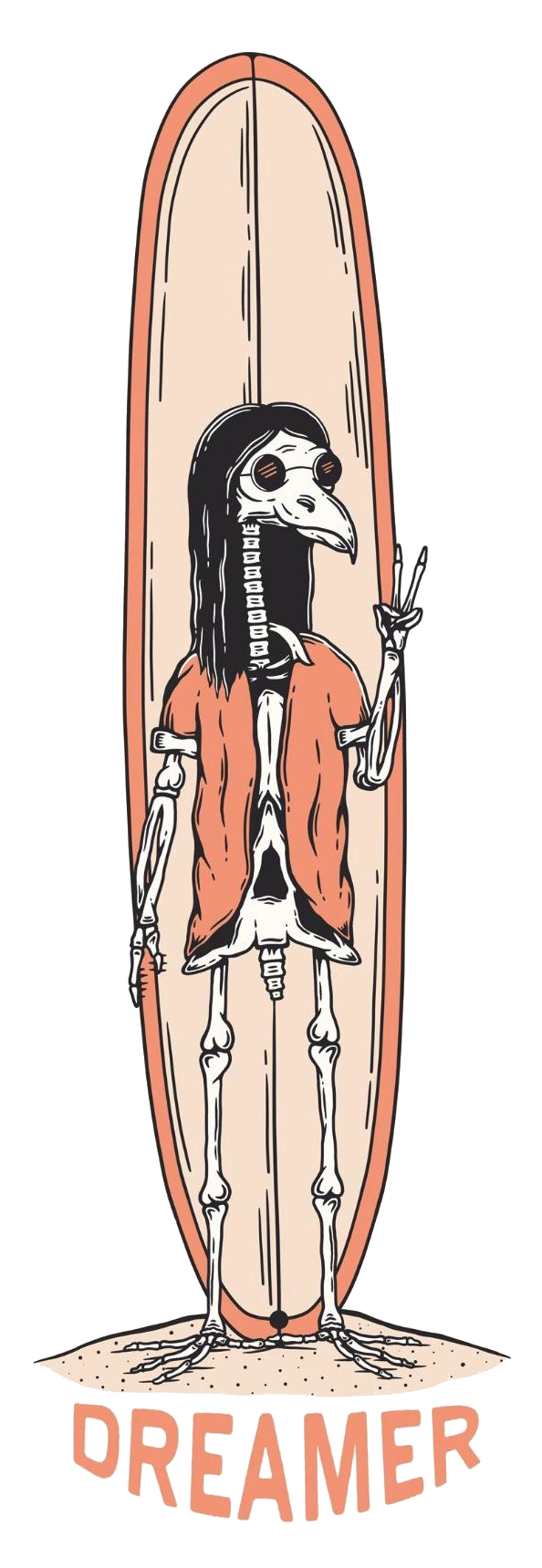
Washed-up dead birds appeared along the shore. At first, the name became a dark joke among friends by calling ourselves the Dead Bird Crew. But the longer we stayed, the less funny it became. We started looking into what was happening and learned that certain wind and swell conditions can concentrate plastic waste in specific coastal areas. Birds mistake plastic for food, fill their stomachs with it and eventually starve.
That image stayed with us.
Back home, the question became more direct. Surfing depends on the ocean, but many surfboards are still built as short-lived mixed-material products with no clear route back after use. Especially in high-frequency environments like surf schools and camps, boards are used hard, damaged often and usually usually en up as waste.
Our first idea was simple. Too simple. Build a softboard from better materials, glue the layers together, separate them again and recycle them.
We quickly learned that the problem was more structural than that.
Bonded layers, mixed materials and complex constructions make recovery difficult. So we changed the approach. Instead of improving a conventional softboard, we started developing a mono-material EPP board designed for operational durability and material recovery from the beginning.
Today, Dead Bird builds surfboards for intensive use and works toward a closed-loop system where boards are delivered, used, returned and brought back into the material stream.